
Attorney Advertising Rules: A Practical Compliance Guide for Law Firms



Why Should Advertising Compliance Matter to You as a Lawyer Right Now?
Legal marketing used to be simple.
You had a directory listing. Maybe a website. Done.
Now?
You are basically running a mini media company:
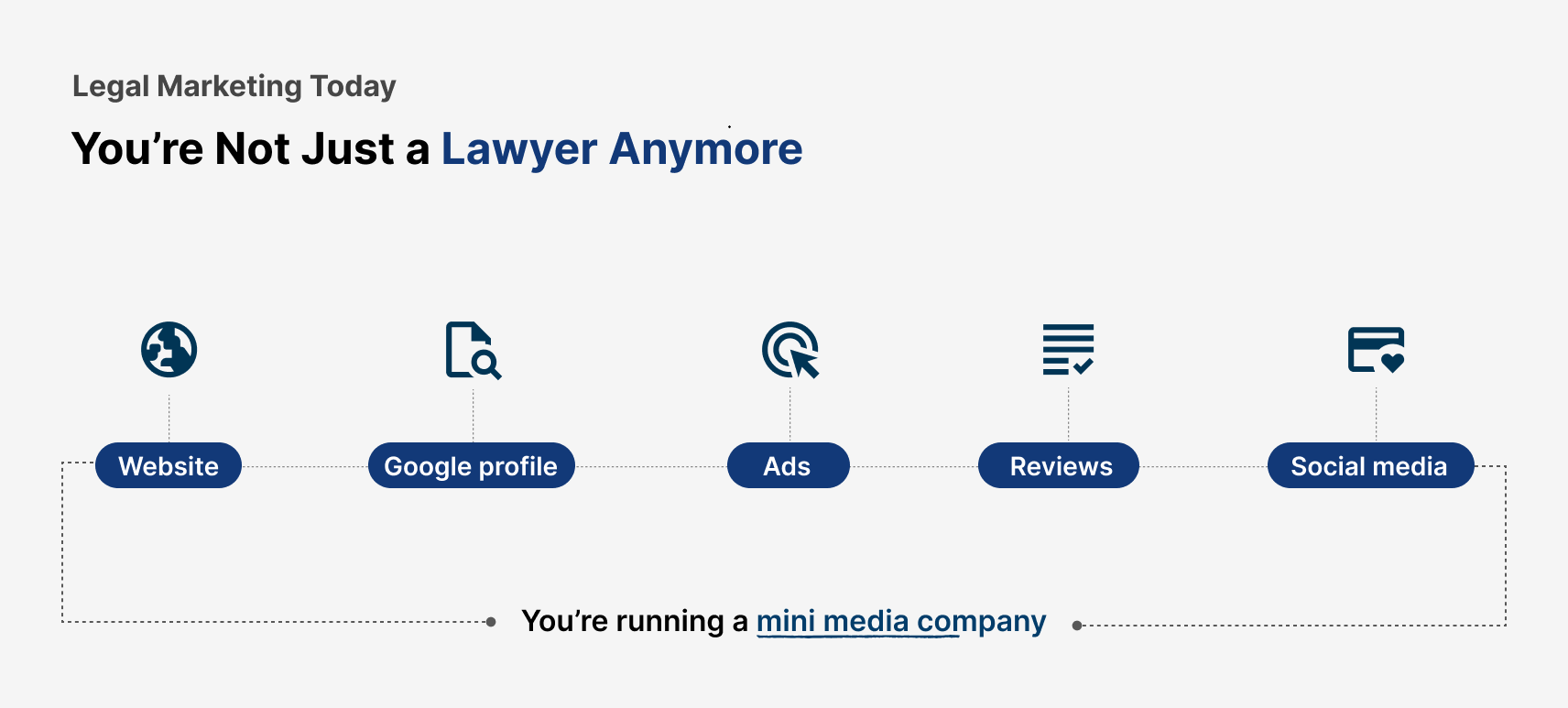
More visibility is great… until one small mistake turns into a not-so-fun email from the bar.
Here’s the kicker:
Around 30–40% of disciplinary actions involve advertising or communication issues.
And no, most lawyers are not out there trying to mislead people.
It’s usually things like:
- A headline that sounds slightly too confident
- A claim that’s almost accurate
- A missing disclaimer
- Or that blog from 2019 still sitting on your site like a forgotten time capsule
Think of your marketing like a courtroom argument.
One weak statement… and suddenly everything else feels questionable.
The goal is not to stop marketing.
The goal is to market without accidentally creating Exhibit A against yourself.
Do You Really Understand the Logic Behind Advertising Rules?
Before memorizing rules, let’s simplify this.
Almost every rule boils down to three things:
- Truthfulness
Can you actually prove what you’re saying… or are you hoping no one asks?
- Transparency
Would a normal person understand your message without decoding it like a legal contract?
- Fairness
Are you informing… or subtly pressuring?
Also, here’s something worth thinking about:
70%+ of clients choose lawyers based on trust first.
So compliance isn’t just about avoiding trouble.
It’s literally part of your marketing strategy.
What Are the 10 Rules You Absolutely Cannot Ignore?
Let’s make this practical (and slightly painful in a helpful way).
1. Can You Call Yourself an “Expert”?
Short answer: Only if you’re officially certified.
Long answer:
You may feel like an expert. Your clients may say you’re an expert.
But regulators? They want paperwork.
Safer (and honestly better):
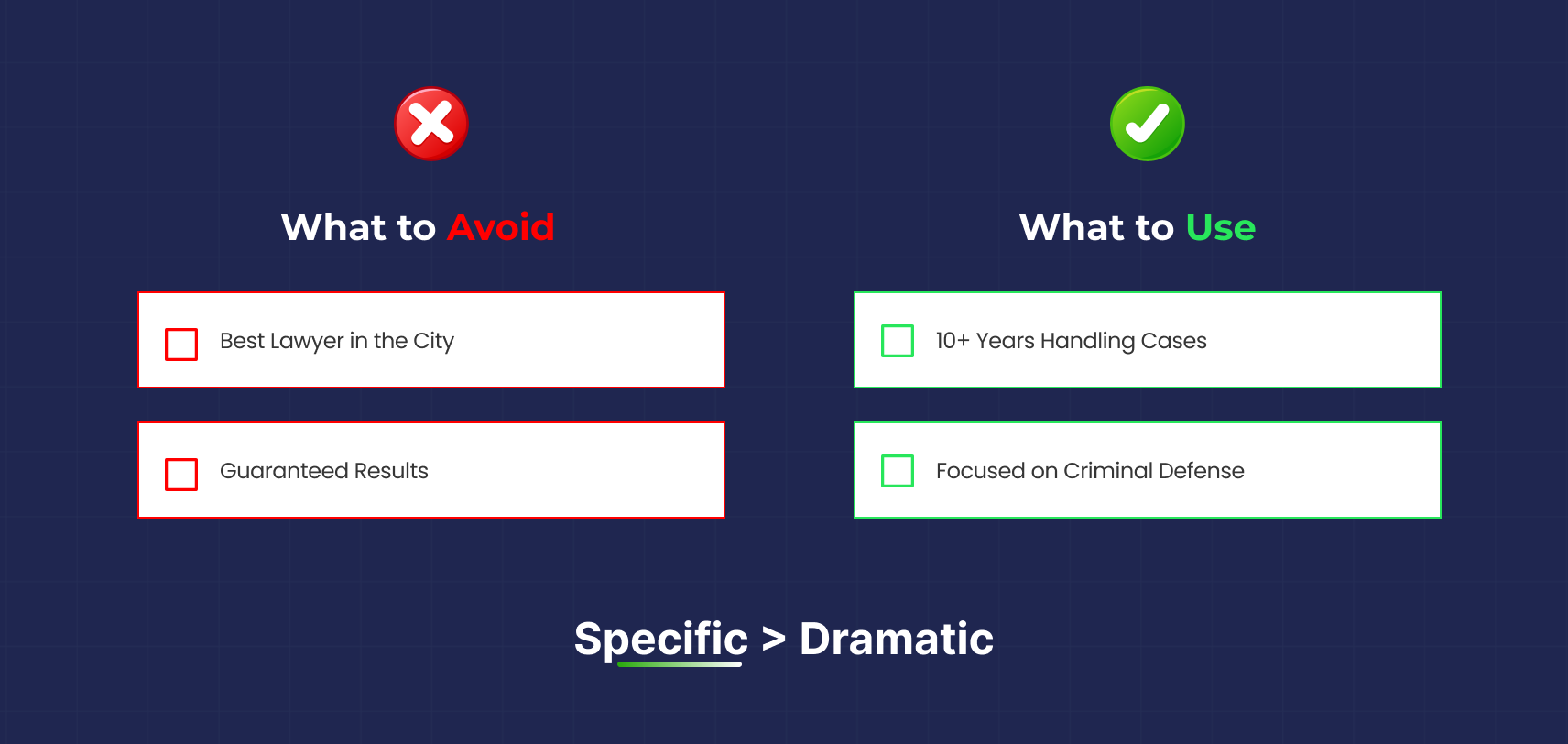
- “10+ years handling criminal defense cases”
- “Focused on personal injury matters”
Specific beats fancy. Every time.
2. Are You Accidentally Overhyping Yourself?
If your ad sounds like:
- “Guaranteed results”
- “Best lawyer in the city”
…it’s probably raising eyebrows already.
Also, clients don’t fully believe it either.
“Best lawyer” often translates to:
“Okay… but show me proof.”
3. Can You Use Testimonials Freely?
Yes… but not like a free-for-all.
Checklist:
- Real?
- Approved?
- Not creating unrealistic expectations?
And please add:
“Past results do not guarantee future outcomes.”
Because one overly excited client can accidentally promise more than you ever did.
Around 72% of clients read reviews before contacting a lawyer, but unrealistic testimonials can backfire fast.
4. Should You Reach Out Directly to Potential Clients?
If your strategy feels like chasing… pause.
Avoid:
- Cold outreach after incidents
- Pushy follow-ups
Marketing should attract, not stalk.
If it feels uncomfortable to explain… it’s probably risky.
5. Do You Really Need to Save Your Ads?
Yes. This is the boring rule that saves you later.
Keep records of:
- Website versions
- Ads
- Campaigns
Simple logic:
If you said it publicly… be ready to show it.
6. Do You Need Disclaimers for Actors or Voiceovers?
If someone in your ad is not a real client… say it clearly.
Even if they look very convincing.
Even if your cousin deserves an Oscar.
Transparency wins.
7. Are You Clearly Showing Who You Are?
Your ad should not feel like a mystery novel.
Always include:
- Firm name
- Responsible attorney
- Contact details
Profiles with clear identity see up to 2x higher engagement and inquiry rates.
People don’t hire “some law firm somewhere.”
They hire people they can identify and trust.
8. Can You Use Any Name for Your Firm?
Creative is fine. Misleading is not.
“Global Justice Experts LLP” sounds impressive…
until someone asks, “How many offices do you actually have?”
9. Can You Compare Yourself with Other Lawyers?
Avoid the “we’re better than everyone” route.
Instead:
- Show your strengths
- Explain your process
- Share real outcomes
Confidence works better than comparison.
10. Who Is Responsible for Your Ads?
Always make it clear.
Think of it like signing a document.
No name = no accountability
No accountability = low trust
Do State Rules Really Differ That Much?
Short answer: Yes.
Long answer: Also yes… and this is where many firms slip.
What works in one state can get flagged in another.
So if you’re copying a strategy from somewhere else…
double-check before you hit publish.
Are You Making These Common (and Risky) Mistakes?
Be honest. Have you ever:
- Overpromised (just a little)?
- Skipped a disclaimer (just this once)?
- Forgotten to update old content?
You’re not alone.
But here’s the catch:
Most violations come from repeat habits, not one-time mistakes.
Small patterns = big problems over time.
Before You Publish Anything, Should You Run a Quick Check?
Yes. This takes less than a minute.
Ask yourself:
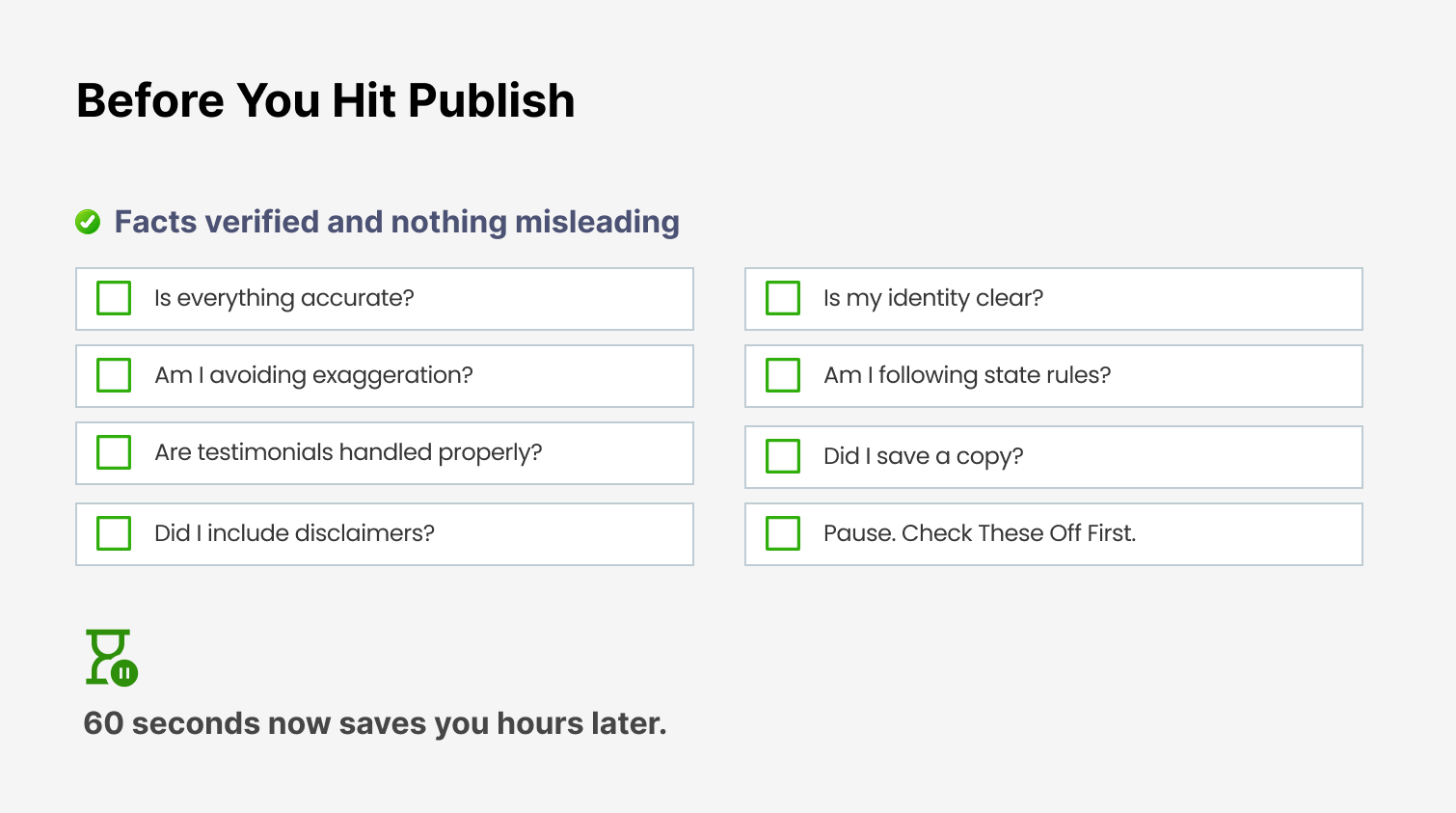
Think of this as your marketing pre-check.
Skip it… and future-you might not be very happy.
Can You Grow Your Firm Without Risking Compliance?
Absolutely.
In fact, the firms that grow the most are not the loudest.
They are the ones that:
- Educate instead of exaggerate
- Build trust instead of pressure
- Stay consistent instead of chasing shortcuts
Here’s the interesting part:
Compliance doesn’t slow you down.
It actually makes your marketing stronger.
Because in law…
Credibility is not just important.
It’s everything.


.png)
.jpg)
.jpg)


