
Crucial Law Firm KPIs and Analytics to Track
.jpg)


Let’s start with a moment of honesty.
Most law firms say they’re tracking marketing.
What they often mean is: someone checks call volume on Monday morning, nods thoughtfully, and moves on.

No judgment. It happens everywhere.
But if you’re investing serious money into SEO, ads, content, or outreach, hoping isn’t a strategy. And guessing definitely isn’t analytics.
Even small conversion improvements can reduce acquisition costs by 15–30%.
Think of marketing data the way you think about case evidence.
You wouldn’t build an argument on vibes alone. Marketing shouldn’t work that way either.
The right numbers don’t just sit in a dashboard. They tell a story:
Where clients discover your firm
Where they hesitate
Where opportunities quietly slip away
This isn’t about becoming a data analyst overnight. It’s about knowing which signals actually help you grow and which ones just look impressive in a report.
What Does “Marketing Campaign Analysis” Actually Mean for Your Law Firm?
Let’s remove the buzzwords for a second.
Campaign analysis simply answers 1 uncomfortable question:
Is your marketing doing anything useful… or just staying busy?
Instead of relying on gut feeling, you look at real signals:
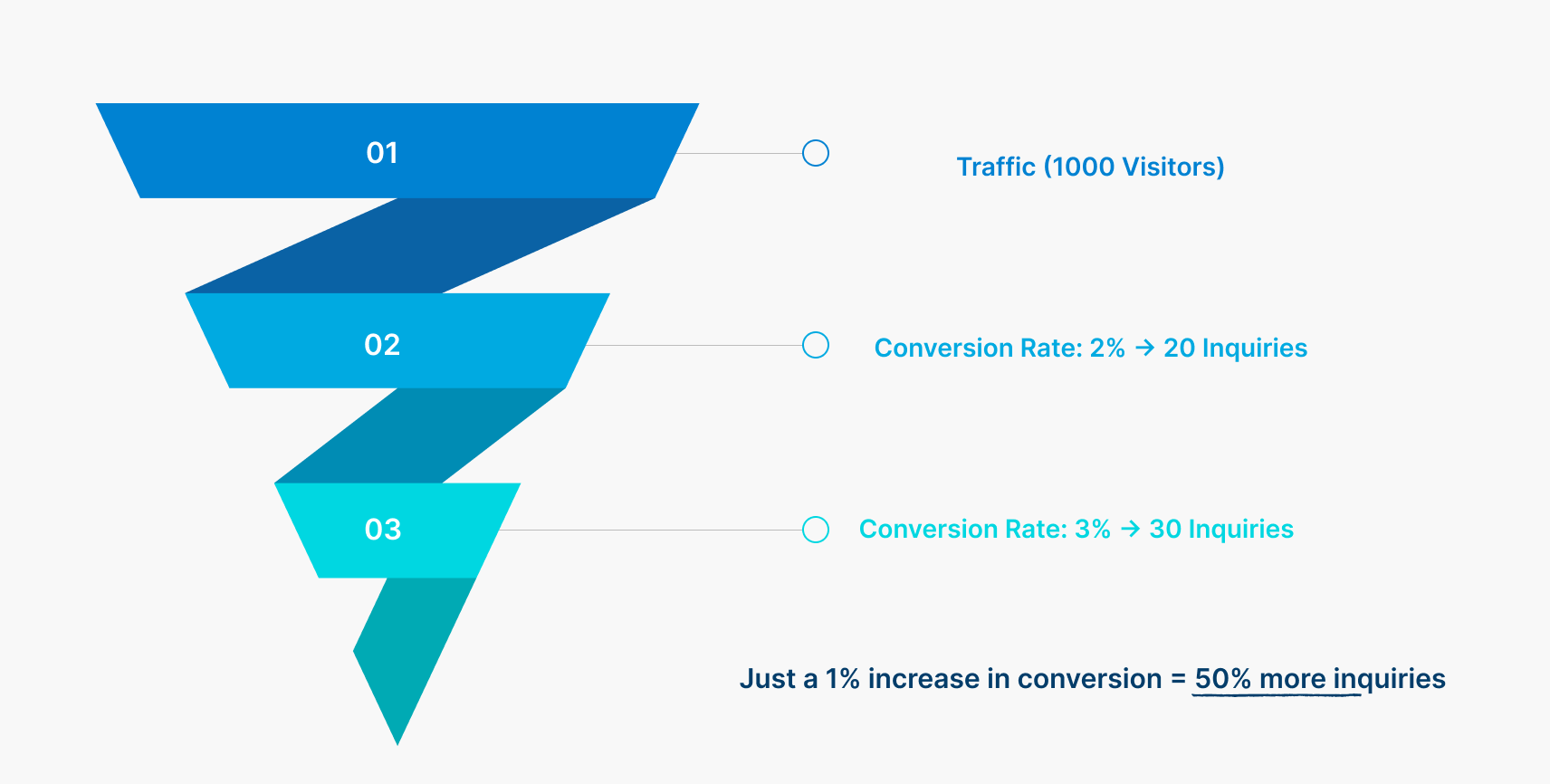
For many firms, a small shift in conversion rate from 2% to 3% can significantly increase inquiry volume without increasing traffic.
- Are qualified leads increasing or just traffic?
- How much does each inquiry actually cost you?
- Which channels bring serious prospects, not just curious browsers?
Because here’s the reality. A potential client rarely moves in a straight line.
Legal clients often interact with a firm 6–8 times before reaching out.
They might:
Google a question at midnight
Read an article days later
Check reviews during lunch
Call weeks after that
Analytics connects those moments so marketing stops feeling random.
Most firms rely on a combination of website analytics, call tracking, CRM data, and intake feedback. Not because it sounds advanced, but because it removes guesswork.
Why Should You Care About Marketing Metrics in the First Place?
Imagine a partner walks into your office and asks:
“So… what did last quarter’s marketing budget actually do?”
That’s usually the moment when marketing feels less like a creative project and more like a courtroom cross-examination.
Metrics give you answers before those conversations happen.
Firms that actively track KPIs can improve lead efficiency by 20–30% over time.
They help you:
- Prove what’s working instead of defending assumptions
- Spot campaigns that look busy but produce nothing
- Shift budget toward real growth
- Understand how people actually decide to contact your firm
And yes, numbers can feel intimidating at first.
But ignoring them is a little like refusing discovery because paperwork is annoying. It might feel easier now, but it creates bigger problems later.
How Do You Measure Success Without Getting Lost in Too Many Numbers?
Here’s where many firms go wrong.
They open 5 dashboards, see 50 metrics, and close everything because it feels overwhelming.
The trick isn’t tracking more data.
It’s tracking fewer things that matter more.
What Goals Should You Define Before Looking at Any KPI?
Before touching analytics, you need to answer one thing:
What does success actually look like for your firm right now?
Maybe it’s:
- More qualified consultations
- Better visibility in a specific practice area
- Higher conversion rates from website visitors
- Stronger client trust and retention
A simple way to keep it focused:
1. Decide the outcome you want
2. Set a realistic timeframe
3. Choose one or two metrics that prove progress
4. Ignore everything else until those improve
Without goals, data becomes noise.
Which KPIs Should You Actually Pay Attention To?
Not every metric deserves your attention.
Some numbers look impressive but don’t move the business forward. Others quietly determine whether marketing works at all.
Which Core Performance Metrics Show Whether Your Marketing Is Working?
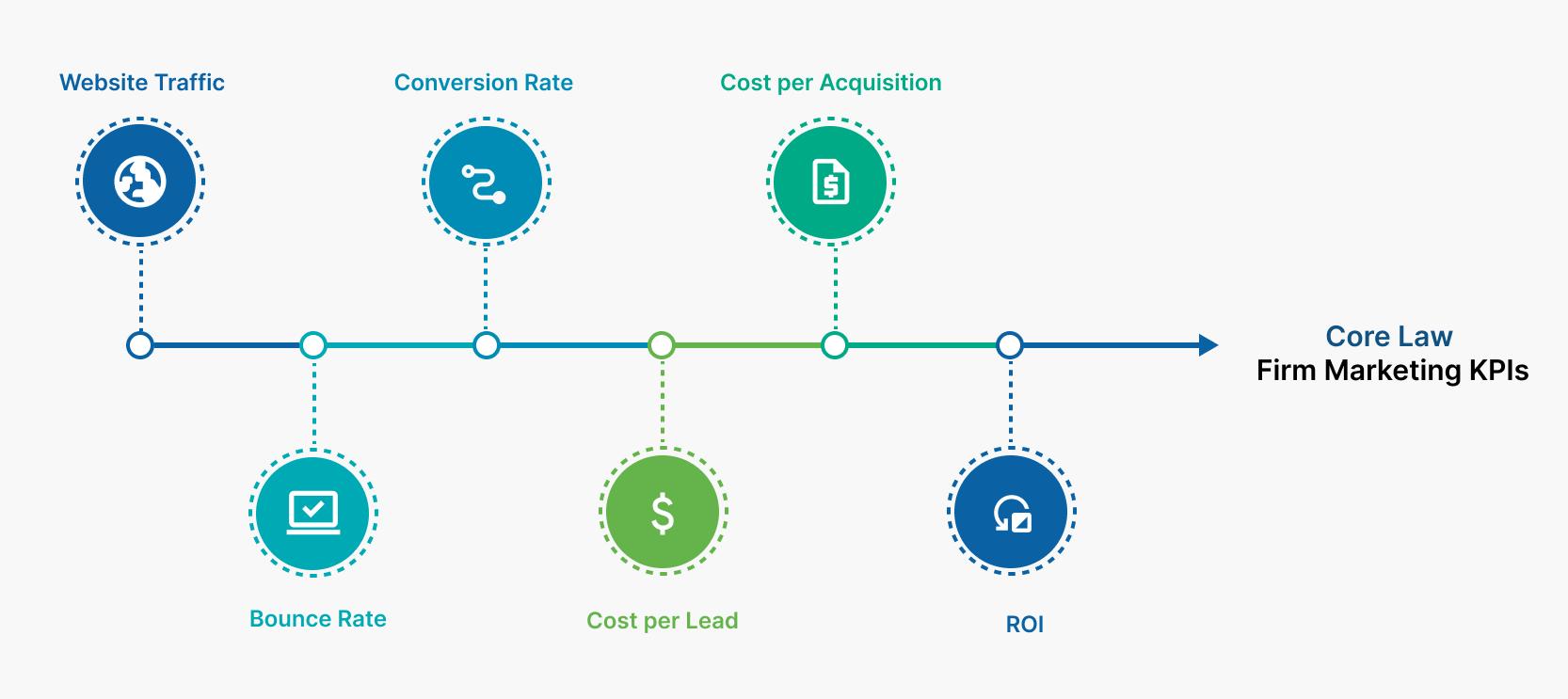
These are the foundation:
- Website traffic showing visibility
- Bounce rate revealing whether visitors stay or leave instantly
- Conversion rate showing how many people take action
- Cost per lead measuring efficiency
- Cost per acquisition showing profitability
- Overall ROI tying everything together
Even a small improvement in conversion rate can change everything. Moving from 2% to 3% might sound minor, but it can mean dozens of additional inquiries without increasing spend.
What SEO Metrics Tell You If Your Firm Is Really Growing?
Ranking #1 feels great.
The top 3 Google results capture roughly 60–70% of clicks. But rankings don’t sign cases.
What matters more is quality traffic, not just volume, along with returning visitors who recognize your brand. You also look at organic calls and form submissions, as well as the time spent on key pages.
If people arrive and leave immediately, that’s not growth. That’s a very polite rejection.
How Do You Know If Your Law Firm’s Brand Is Getting Stronger?
Branding isn’t always loud. Sometimes it whispers through patterns.
Signs your brand is gaining traction:
- More searches including your firm’s name
- Direct visits without ads
- Positive reviews increasing over time
- Repeat engagement from past clients
When people start looking for you specifically, marketing stops feeling like an uphill battle.
What Email Marketing Metrics Should You Track?
Email isn’t dead. Bad emails are.
What matters is open rates that show whether subject lines work, click-through rates that reveal real interest, and unsubscribe trends that signal fatigue.
If readers stop opening messages, they’re not being rude. They’re telling you something needs to change.
Which Social Media Metrics Matter More Than Follower Counts?
Follower numbers look nice in presentations. Engagement tells the real story.
Focus on reach and impressions, meaningful comments and shares, and mentions of your firm online.
One thoughtful interaction often matters more than hundreds of silent views.
What PPC Metrics Show If Your Paid Ads Are Worth It?
Paid campaigns give fast feedback, but only if you look at the right signals:
- Click-through rate showing ad relevance
- Cost per click managing budget health
- Cost per lead tied to actual inquiries
- Return on ad spend
Often the biggest improvement doesn’t come from bigger budgets. It comes from better landing pages.
What Tools Do You Actually Need to Track Law Firm KPIs?
There’s a myth that successful firms run on complicated tech stacks.
In reality, you need tools that make decisions easier, not harder.
Most firms do well with website analytics for behavior insights, CRM systems for intake tracking, and social and email analytics for engagement.
If a tool requires constant training just to understand it, it’s probably not helping.
Should You Change Strategy Before Analyzing What’s Already Working?
It’s tempting to chase new ideas when results feel slow.
But sometimes the answer isn’t a new strategy. It’s a clearer look at what already exists.
Questions worth asking:
- Which channels consistently bring real inquiries?
- Where do prospects hesitate before contacting you?
- What do client conversations reveal that data alone doesn’t?
The best improvements often come from small adjustments, not dramatic overhauls.
How Can You Improve Performance Without Overhauling Everything?
Growth doesn’t always require reinvention.
Sometimes it’s about subtle shifts, like moving budget toward the channels that quietly outperform, adjusting messaging based on engagement trends, testing new content formats without abandoning what works, and simplifying intake so prospects don’t feel overwhelmed.
Small, consistent changes usually outperform big, reactive ones.
How Often Should You Review Your Marketing Data?
Marketing isn’t a one-time report. It’s an ongoing conversation with your audience.
A simple rhythm helps: establish baseline numbers, launch or adjust campaigns, review performance monthly, and make small refinements.
Patterns only become clear when you look consistently, not occasionally.
Short FAQ: Law Firm KPIs and Analytics
Which KPI matters most for law firms?
There isn’t a single universal metric, but conversion rate and cost per acquisition usually give the clearest picture of performance. They show not just how many people are visiting, but how efficiently marketing turns attention into signed clients, which ultimately affects revenue.
How often should I review analytics?
A monthly review helps track momentum without becoming overwhelming, while quarterly deep dives allow for bigger strategic adjustments. Looking too frequently can create unnecessary panic, but waiting too long makes it harder to spot trends early.
Are vanity metrics useless?
Not completely. Metrics like impressions or follower counts can indicate visibility and awareness, but they shouldn’t guide major decisions on their own. When combined with conversion data, they can help explain why certain campaigns succeed or struggle.
Do smaller firms need complex analytics tools?
No. Many smaller firms get strong insights from just a few reliable platforms like website analytics and a CRM. The goal isn’t complexity, it’s clarity. Even simple tracking can reveal patterns that improve marketing efficiency over time.
What’s a common mistake when tracking KPIs?
One of the biggest mistakes is tracking too many numbers without tying them back to clear business goals. When every metric feels equally important, it becomes harder to know what to fix or improve, which leads to analysis without action.
Ending Note
Tracking KPIs doesn’t mean turning your law firm into a tech company.
It simply means removing uncertainty.
When you understand which efforts attract real clients and which ones don’t, marketing stops feeling unpredictable. It becomes something you can shape, refine, and improve over time.
The firms that grow steadily aren’t always the loudest or the biggest spenders.
They’re the ones paying attention to the right signals and adjusting with intention.


.png)
.jpg)
.jpg)


