
Law Firm Branding: Our Top Insider Tips
.jpg)


Let’s start with a slightly uncomfortable truth.
“Trust me, I’m a lawyer” sounds powerful in a courtroom drama. Online? It lasts about 3 seconds before someone clicks another firm with clearer messaging and a better photo.
Nearly 75% of users judge a business’s credibility based on visual presentation alone.
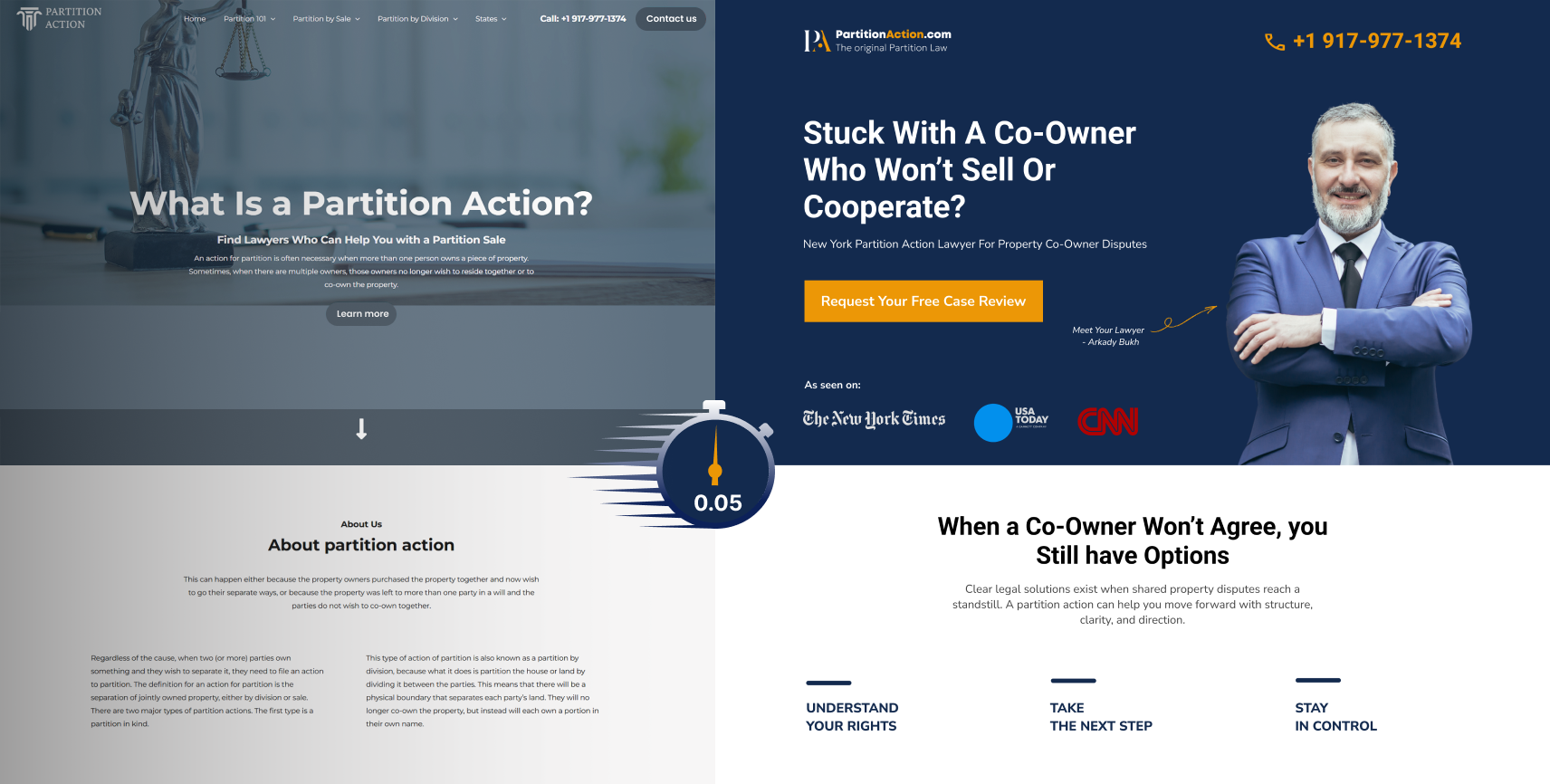
Today’s clients don’t read websites the way judges read briefs. They skim. They compare. They make fast decisions based on confidence and clarity. Some studies suggest people form an impression of a website almost instantly. Research shows users form a first impression in as little as 0.05 seconds. That means your branding is already speaking before your receptionist even says hello.
And here’s the part nobody loves hearing.
Clients don’t always choose the most experienced attorney. They choose the firm that feels understandable. The one that looks calm instead of chaotic. The one that makes them think, “Okay… I don’t feel overwhelmed here.”
This isn’t marketing theory. Think of it as a practical conversation about how real law firms build brands that feel trustworthy without turning their practice into a social media circus.
What You’ll Learn About Law Firm Branding From This Guide?
If you’ve ever opened another firm’s website and thought,
“How do they look so polished… and why does mine feel invisible?”
you’re not alone.
Inside this guide, we’ll break down:
- How to build a legal brand that feels human without sounding casual
- How to define a real USP instead of phrases like “experienced and dedicated”
- What separates firms clients remember from firms they forget before closing the tab
Let’s start with the foundation.
What Is Law Firm Branding and Why Does It Matter to you?
Branding is the impression someone forms before they ever speak to you.
Picture this. A potential client opens 3 law firm websites at midnight after a stressful day. One site looks outdated. One feels overly aggressive. One feels clear, calm, and easy to understand.
Guess which firm gets the call.
Branding answers two silent questions:
Who are you?
And can I trust you with something serious?
It’s not just logos or colors. It’s messaging, tone, positioning, and reputation working together quietly behind the scenes.
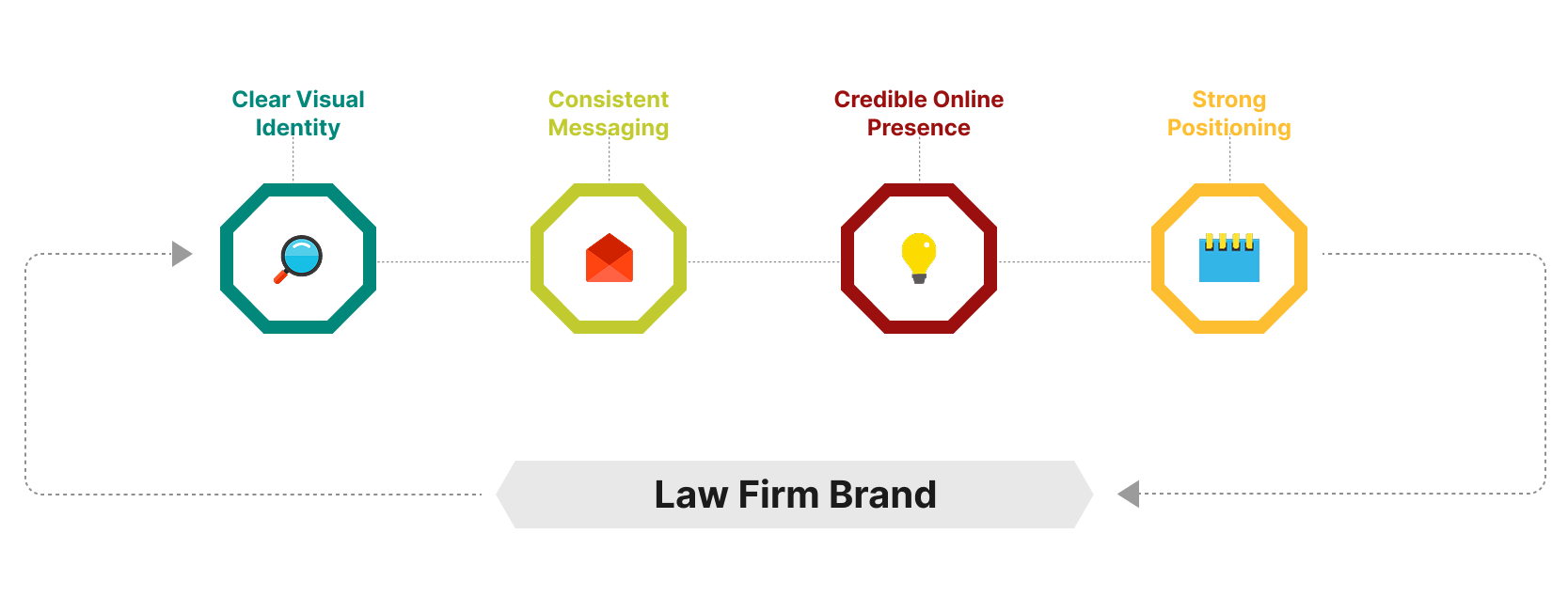
Strong law firm branding usually includes:
- A clear visual identity
- Consistent messaging and tone
- A credible online presence
- Strong positioning for both the firm and its attorneys
In a crowded legal market, clarity becomes your advantage.
Clear messaging can improve website engagement rates by 20–30%.
What Is the Real Goal of Law Firm Branding?
Branding isn’t about being louder. It’s about being familiar.
People don’t always pick the best restaurant in town. They pick the one they recognize. Brand familiarity can increase decision confidence by nearly 60%.
Legal clients behave the same way.
When someone suddenly needs legal help, they don’t want to compare twenty firms. They choose the name that already feels known.
The goal isn’t to shout. It’s to stay memorable long before someone needs you.
Should You Focus on Your Firm Brand or Personal Lawyer Brand?
Many firms treat branding like assembling furniture from a manual.
Logo? Done.
Website? Done.
Attorney bios? Uploaded.
Case closed.
Except… not really.
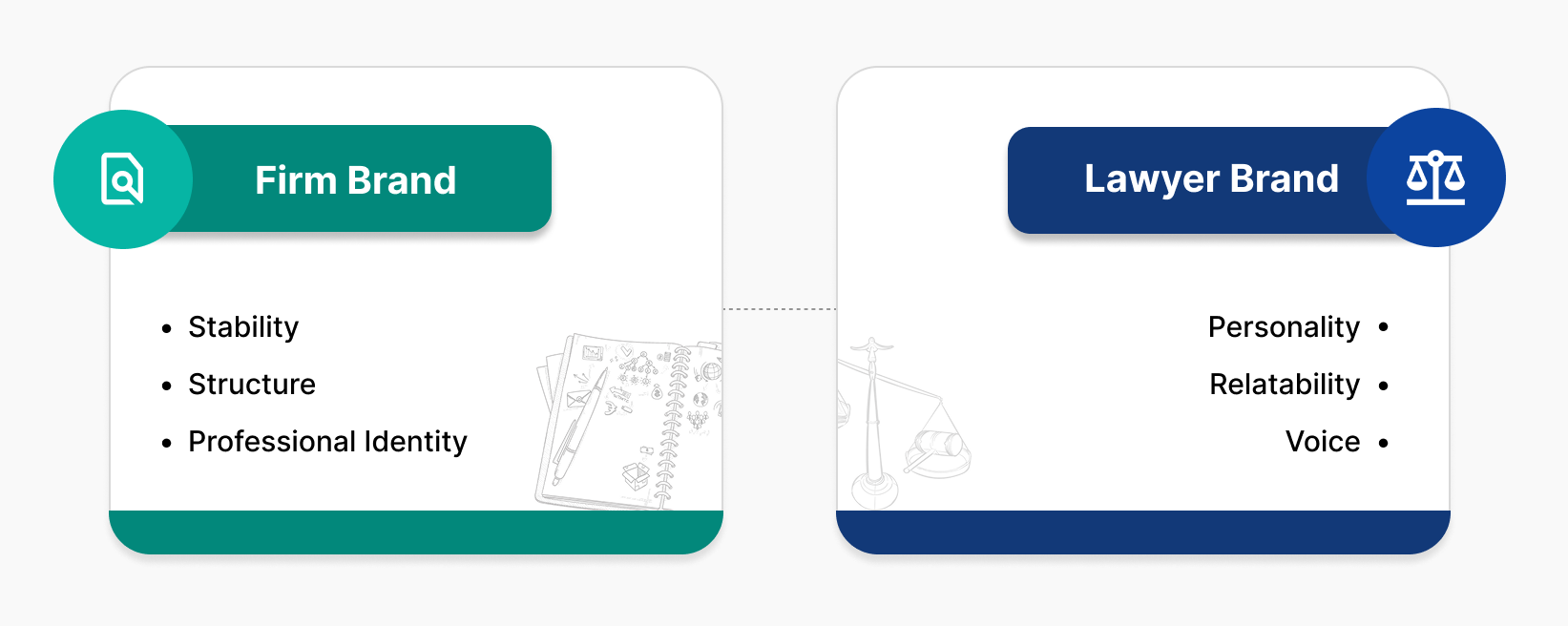
Your firm identity and your personal presence play very different roles.
- The firm brand builds stability and professionalism
- The lawyer brand builds connection and relatability
Imagine a beautiful website where every attorney bio reads like a legal encyclopedia. Technically impressive. Emotionally distant.
Now imagine the opposite. Attorneys posting insightful content online, but the firm’s website still features a grainy courthouse photo from 2009.
Neither feels complete.
Branding works best when the firm creates the structure and the attorneys bring the human element.
What Defines Your Law Firm’s Online Identity?
Your identity isn’t 1 big decision. It’s dozens of small signals working together:
- Website messaging
- Visual consistency
- Overall tone
- Reviews and reputation
When these align, something subtle happens. People start thinking, “I feel like I’ve seen this firm before.”
And that quiet familiarity builds trust faster than any slogan.
Consistent branding across channels can increase recognition by up to 3×.
Why Does Individual Lawyer Branding Matter So Much?
Clients don’t hire logos. They hire people.
LinkedIn reports that personal professional content often generates up to 2× more engagement than brand-only posts.
That doesn’t mean dancing on social media or posting inspirational quotes over stock images of gavels.
It means showing up with a clear professional voice.
A thoughtful LinkedIn post explaining a legal change. A bio that sounds like a real person instead of a law textbook. A consistent tone that feels approachable without losing authority.
These small touches make clients feel like they already know who they’re talking to.
What Are the Core Elements That Actually Make Law Firm Branding Work?
Branding becomes practical when you stop thinking about aesthetics and start thinking about daily perception.
1. How You Can Create Messaging That Sounds Human but Still Professional?
If your homepage sounds like every other firm, visitors leave faster than a witness avoiding cross-examination.
Many users decide within seconds whether to stay on a page.
Some studies suggest visitors decide in under 10 seconds whether to continue exploring a website.
Strong messaging should:
- Reflect how your team actually communicates
- Address real client concerns
- Sound confident without sounding robotic
Here’s a quick test. Replace your firm’s name with another firm’s name. If the paragraph still works perfectly, it’s too generic.
2. How Important Is Visual Consistency for Law Firm Branding?
You don’t need flashy design. You need consistency.
Think of it like courtroom attire. Nobody remembers the loudest suit. They remember the one that looks sharp and intentional.
Repeated colors, typography, and layouts create recognition over time. Clients may not consciously notice it, but their brain absolutely does.
3. Do Law Firms Really Need a Mission Beyond Generic Claims?
Clients already assume professionalism. That’s the baseline.
What they want to understand is:
Who do you help most?
What problems do you solve repeatedly?
Why does your work matter?
A clear mission makes your firm feel purposeful instead of interchangeable.
4. How Does Client Experience Affect your Brand Reputation?
Branding isn’t just what you say. It’s what happens after someone clicks “Contact.”
An organized intake process feels reassuring. A confusing form feels stressful. A delayed response feels dismissive.
One awkward interaction can undo months of branding work. One thoughtful interaction can strengthen trust instantly.
5. How you Should Manage your Law Firm’s Online Reputation?
Online reviews are basically modern word-of-mouth.
Many people treat them like personal recommendations. That means ignoring reviews is like ignoring a room full of people talking about your firm.
Strong firms:
- Monitor feedback regularly
- Respond professionally
- Encourage satisfied clients to share experiences
Your reputation is already being shaped. The question is whether you’re guiding it.
6. Why Is Consistency Across Every Channel So Important?
Imagine your website sounds formal, your emails sound casual, and your social media sounds like a corporate memo.
Confusing, right?
Consistency makes your firm feel stable. And stability is exactly what clients look for when their situation feels uncertain.
How you Can Build a Law Firm Branding Strategy That Actually Works?
Strategy starts with clarity, not design.
1. How to Identify the Right Clients for your law Firm?
Trying to speak to everyone usually means connecting with no one.
Focused positioning can improve conversion rates by 2–3× compared to broad messaging.
Define:
- Who your ideal client is
- What problem they’re facing
- What outcome matters most to them
When branding reflects real concerns, messaging stops feeling forced.
2. What Makes Your Law Firm Different (And How to Define It)
Most law firm websites sound nearly identical.
Your positioning should answer 1 honest question:
Why should someone choose your firm instead of another?
Sometimes it’s your niche. Sometimes it’s your background. Sometimes it’s simply how clearly you communicate.
3. Why You Should Align Messaging and Tone First Before Creating New Content?
Messaging is what you say. Tone is how it feels.
When those align, your content stops sounding scattered. Over time, consistency builds familiarity.
And familiarity builds trust faster than any clever tagline.
4. How to Create a Brand Story Clients Actually Connect With?
People remember stories more than service lists.
A strong narrative positions your client as the central character and your firm as the trusted guide helping them navigate uncertainty.
5. What Kind of Visual Identity Builds Confidence for a Law Firm?
Your visuals don’t need to be dramatic. They need to feel intentional.
Clean design, consistent typography, and realistic imagery help clients feel like they’re dealing with professionals who pay attention to detail.
6. How You Can Manage your Law Firm’s Reputation Proactively?
Deliver consistent service. Ask for feedback at the right time. Respond thoughtfully to reviews. Monitor online mentions.
Trust grows through small, repeated actions.
7. How Branding Fits Into Your Marketing Budget
Branding and lead generation serve different purposes.
- Smaller firms often focus on short-term growth while building brand awareness gradually
- Growing firms invest more in long-term recognition
- Established firms rely heavily on brand authority
Branding is the quiet investment that keeps working long after an ad campaign ends.
8. How to Turn Your Branding Into a Repeatable System
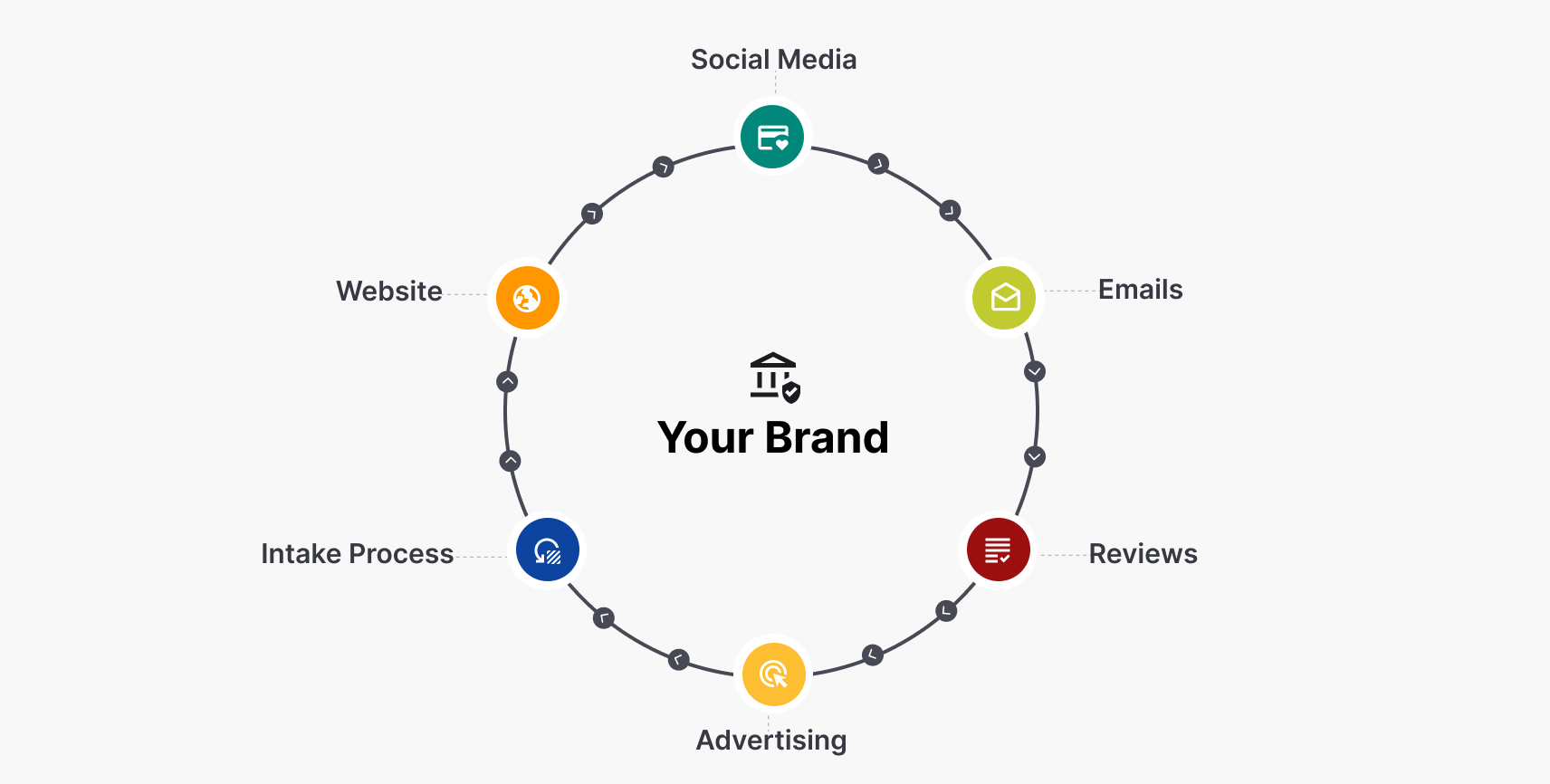
Once positioning, messaging, and visuals are clear, integrate them everywhere:
- Website content
- Advertising
- Emails
- Social media
- Intake conversations
Branding becomes powerful when it stops feeling like a project and starts feeling like a habit.
Common Law Firm Branding Questions Answered
Does branding really matter for small or boutique firms?Absolutely. A clear identity helps smaller firms stand out in crowded search results and feel more memorable, especially when positioning is specific enough for clients to see you as a focused expert rather than just another option.
How often should a law firm update its branding?Small refinements can happen regularly as messaging evolves, but a full rebrand usually makes sense every few years or whenever your positioning, audience, or services shift in a meaningful way.
Is personal branding risky for law firms?Not when it aligns with the firm’s identity and professional tone, because clients often feel more confident when they can clearly see the people behind the expertise and understand who they will be working with.
What’s the biggest branding mistake law firms make?Trying to appeal to everyone instead of speaking clearly to a specific audience tends to dilute credibility, while focused messaging builds stronger trust and makes your firm easier to remember.
Do visuals matter as much as messaging?Yes, because visuals create the first impression while messaging builds deeper credibility, and when both work together consistently your brand feels more professional, stable, and recognizable.
What You Should Do Next?
You don’t need a dramatic rebrand tomorrow.
Start with clarity. Define what makes your firm different. Build a recognizable visual identity. Write messaging that sounds natural. Then align your presence everywhere.
And remember, your website is the center of your brand. If it isn’t clear, fast, and conversion-focused, even strong branding will struggle.
Final Thoughts: How Your Branding Works Over Time
Law firm branding isn’t a one-time project. It’s the way your firm shows up every day.
When positioning, messaging, visuals, and client experience align, something interesting happens. Your brand starts working quietly in the background.
Clients don’t say, “I chose you because of your branding.”
They say, “I don’t know why… your firm just felt right.”
And honestly, that’s when you know it’s working.


.png)
.jpg)
.jpg)


