
Law Firm Client Intake: How to Turn “Just Browsing” into Signed Clients
.jpg)


Let’s start with a slightly uncomfortable scene.
A potential client calls your firm.
They’re stressed. Confused. Possibly Googling three other lawyers while on hold.
Your team says:
“Hello… how can I help you?”
And just like that… you’ve already won or lost.
No pressure.
Quick Reality Check
Most law firms spend serious money on:
- SEO
- Ads
- Websites
But the actual moment that decides everything?
The intake process.
That first call. That first form. That first conversation.
And here’s the painful part:
You can generate 100 leads… and still sign 10 if intake is weak.
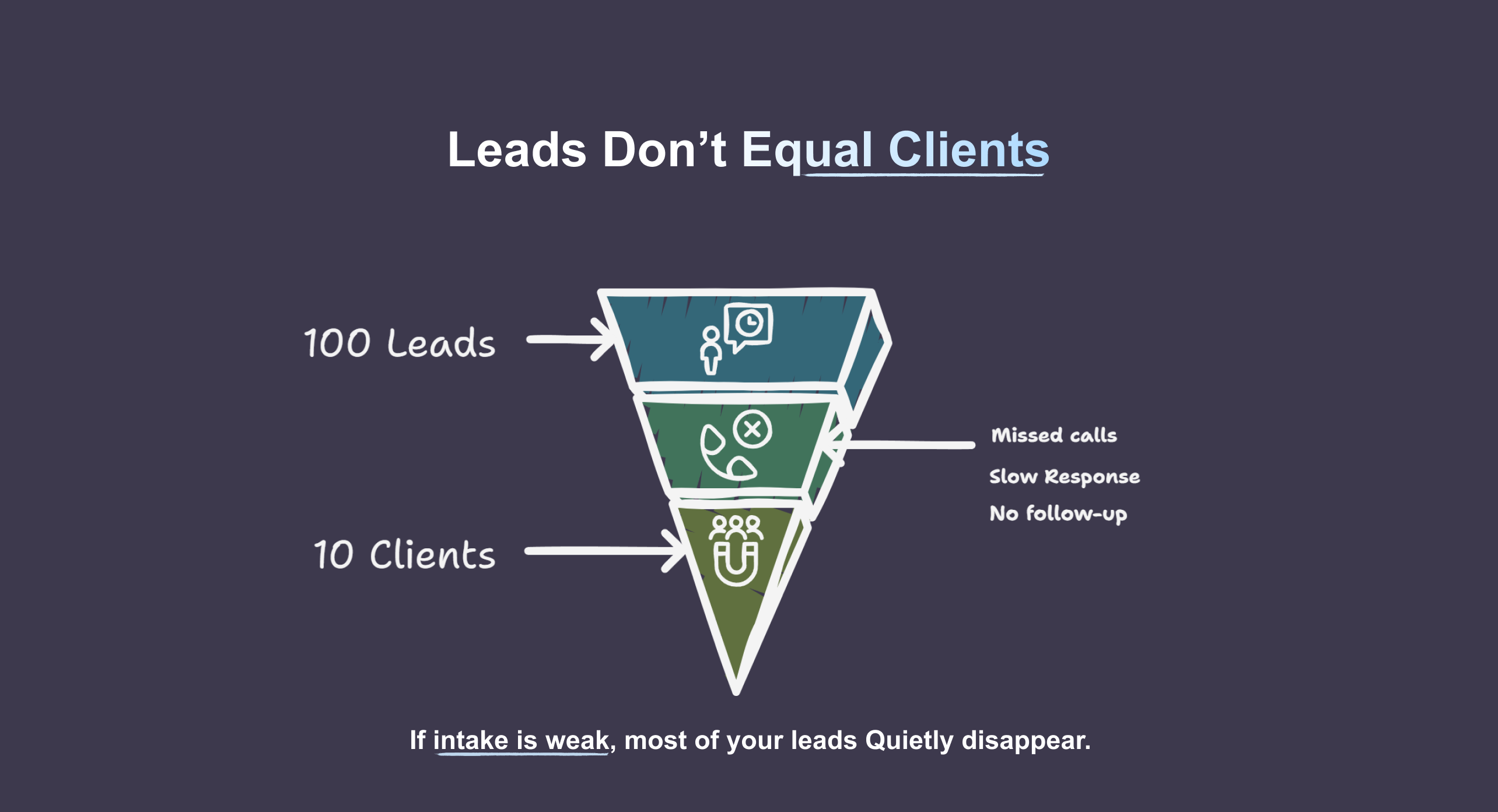
In fact, many firms convert only 5–15% of incoming leads, while optimized intake systems can push that to 25–35%+.
So no, intake isn’t admin work.
It’s your highest-converting sales process (just dressed in polite legal language).
What You’ll Learn in This Guide
If you’ve ever thought:
- “We’re getting leads… but not enough clients”
- “Why do prospects disappear after calling?”
- “Is it marketing… or something else?”
You’re in the right place.
We’ll break down:
- How to stop losing good clients silently
- What actually happens during intake (and where things go wrong)
- How to fix it without turning your firm into a call center
What Is Law Firm Client Intake (Without the Fancy Definition)?
Simple version:
It’s the moment a stranger decides whether you’re “their lawyer”… or just another tab.
And here’s the catch:
Most users make that decision in under 5–10 minutes of interaction.
That includes:
- Phone calls
- Website forms
- Emails
- Chat
Basically, any first interaction where trust is still fragile
Why Most Law Firms Quietly Struggle with Intake
Let’s be honest for a second.
Many firms treat intake like this:
“Just get their details… we’ll handle the rest later.”
But clients don’t think like that.
They’re asking:
- “Do they understand my situation?”
- “Do I feel comfortable here?”
- “Should I keep looking?”
And if the answer is even slightly uncertain…
they’re already dialing the next number.
Studies show that 78% of legal clients contact more than one firm before deciding.
So if you hesitate… you lose.
What a Strong Intake Process Actually Does
A good intake process doesn’t feel like a process.
It feels like:
- Someone listening
- Someone guiding
- Someone who knows what they’re doing
Behind the scenes, it:
- Filters serious clients from time-wasters
- Builds trust instantly
- Moves people toward a decision
Firms that improve intake experience often see 20–30% higher client retention and conversion rates.
The 7-Step Intake System
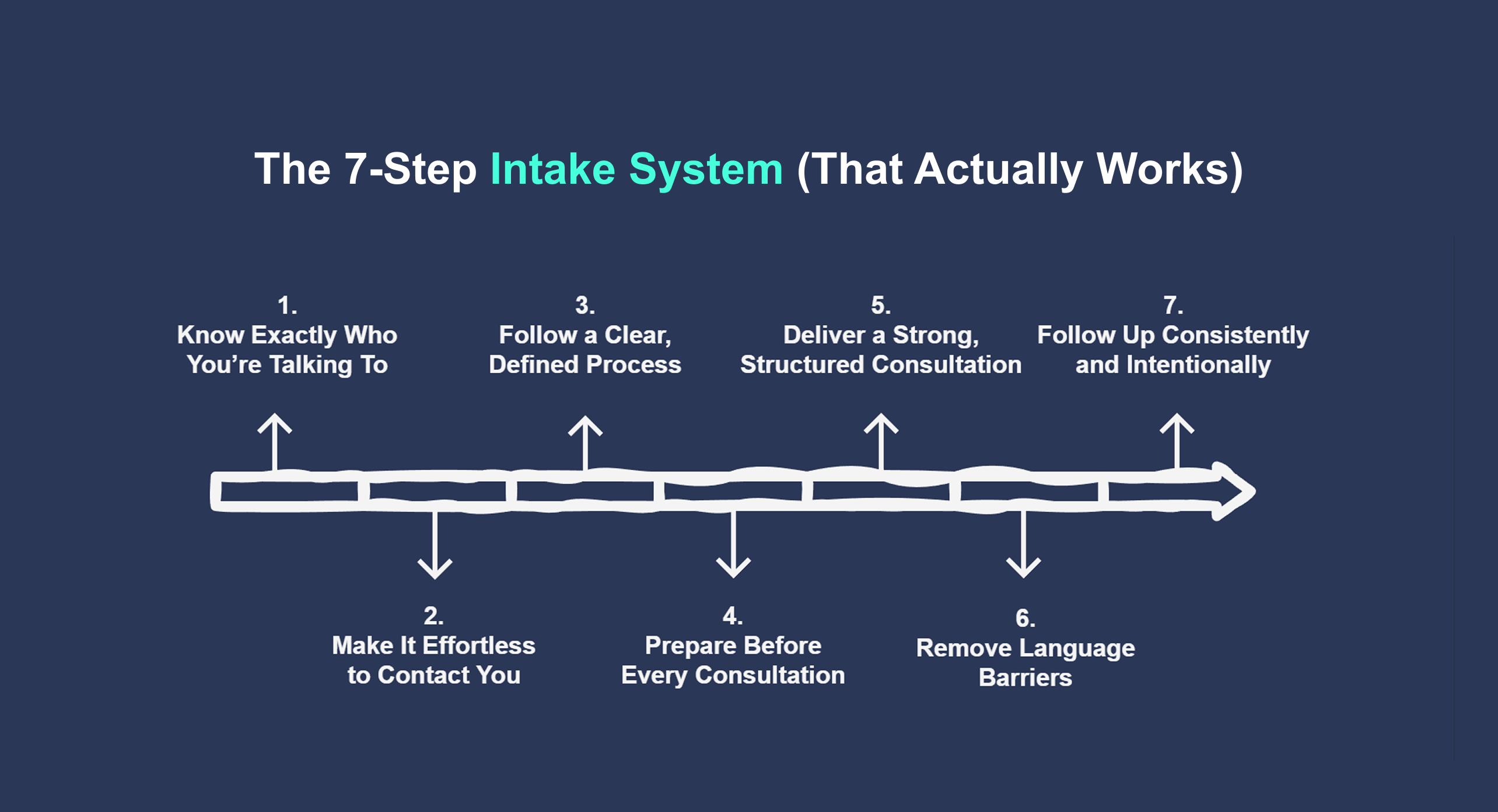
Let’s break this down properly.
1. Do You Even Know Who You’re Talking To?
Not every client is the same.
A stressed divorce client ≠ a corporate client ≠ an injury victim.
If your intake sounds identical for everyone, it feels generic.
Think about:
- Age
- Situation
- Urgency
- Emotional state
Because yes… legal problems are emotional before they are logical.
2. Are You Easy to Reach… or Slightly Annoying to Contact?
Be honest.
Can a client:
- Call easily?
- Fill a simple form?
- Get a quick response?
Or do they:
- Fill 12 fields
- Wait 24 hours
- Wonder if the form even worked
Multiple channels = more opportunities:
- Phone
- Forms
- Chat
And faster responses = higher conversions. Always.
3. Do You Have a Process… or Just “See How It Goes”?

This is where many firms lose consistency.
If every call depends on “who picks up,” you don’t have a system.
You have a gamble.
A strong intake system:
- Follows a structure
- Asks the right questions
- Feels natural (not robotic)
Consistency can improve close rates by 15–25% over time.
Consistency builds trust. Randomness doesn’t.
4. Are You Prepared Before the Consultation?
Imagine this:
Client shows up.
You’re still figuring out basic details.
Confidence drops instantly.
Preparation includes:
- Case overview
- Basic background
- Clear questions
Because nothing says “we’re not organized” like asking the same question twice.
5. Can You Actually Hold a Good Consultation?
This is where deals are won or lost.
3 things matter most:
1. Listening (not interrupting like it’s cross-examination)
2. Empathy (yes, even in law)
3. Clarity (no legal jargon marathons)
Clients don’t expect perfection.
They expect to feel understood.
6. Are You Missing Out on Clients Because of Language?
This one is often ignored.
If a client struggles to explain their situation clearly…
they won’t feel confident moving forward.
Even basic bilingual support can:
- Improve comfort
- Build trust
- Increase conversions
Simple, but powerful.
7. Do You Follow Up… or Just Hope They Come Back?
Hope is not a follow-up strategy.
Clients get busy. Distracted. Overwhelmed.
If you don’t follow up:
- Someone else will
- And they’ll sound more interested
Nearly 50% of leads go with the firm that follows up first.
Simple fixes:
- Quick response emails
- Scheduled callbacks
- Gentle reminders
Speed = seriousness in the client’s mind.
The Unsung Hero: Client Intake Forms
Let’s talk about forms for a second.
Done wrong:
- Long
- Confusing
- Feels like paperwork before trust
Done right:
- Clear
- Structured
- Saves time for both sides
What to include:
- Basic contact info
- Case summary
- Timeline
- Financial context (yes, important)
Well-designed forms can improve completion rates by 20–40%.
Think of it as:
Pre-conversation clarity
Should You Use an Intake Script? (Short Answer: Yes)
Not to sound robotic.
But to avoid:
- Forgetting key questions
- Missing important details
- Going off-track
A good script feels like:
- A guide
- Not a script
Red Flags: Clients You Should Probably Avoid
Not every lead is a good client.
And some will cost more than they bring.
Watch for:
- Unrealistic expectations
- Fee disputes before starting
- History of switching lawyers
- “I just need quick advice” (with no intention to pay)
Saying “no” early saves a lot later.
Common Intake Mistakes (That Quietly Kill Conversions)
Let’s keep this honest.
Have you ever:
- Taken too long to respond?
- Sounded rushed on a call?
- Skipped explaining fees clearly?
- Let a lead “think about it” without follow-up?
Small gaps… big losses.
Even a 1–2% drop in conversion rate can mean dozens of lost clients over time.
Why Intake Is Not Just a Process (It’s a Revenue System)
Here’s the reality:
You already paid to get that lead.
If you lose them during intake:
- You lose the client
- You waste the marketing cost
As one expert puts it:
Losing a prospect costs you twice.
Final Thought: The Moment That Actually Matters
Your website builds interest.
Your ads create attention.
Your reputation builds trust.
But intake?
That’s where decisions happen.
Clients don’t say:
“I chose this firm because of their intake system.”
They say:
“I just felt comfortable talking to them.”
And that… is the entire goal.
What You Should Do Next
You don’t need a complete overhaul.
Start here:
- Respond faster
- Listen better
- Follow up consistently
- Simplify your process
Fix these… and you’ll see the difference.
FAQs: Law Firm Client Intake
1. How fast should we respond to a new inquiry?
Ideally… immediately.
Realistically… within 5–15 minutes.
Responding within this window can increase your chances of conversion by up to 400% compared to delayed responses.
Remember:
You’re not just responding.
You’re competing.
2. Do we really need a structured intake process?
Yes. Unless you enjoy:
- Inconsistent conversations
- Missed details
- Lost clients
A structured process doesn’t make you robotic.
It makes you reliable.
And reliability builds trust faster than charm.
3. Should lawyers handle intake themselves or delegate it?
Depends on your setup.
But here’s the truth:
- Lawyers close better
- Trained intake staff scale better
Firms using hybrid models often see higher efficiency + better close rates.
Best approach?
Let trained staff handle the first interaction…
and bring the lawyer in at the right moment.
4. What’s the biggest mistake law firms make in intake?
Assuming the client will come back.
They won’t.
If you:
- Delay responses
- Skip follow-ups
- Sound unclear
…you’re not “losing leads”
You’re handing them over to your competitors.


.png)
.jpg)
.jpg)


