
Reputation Management for Lawyers
.jpg)


Because Your Next Client Is Already Judging You (Online)
Quick Reality Check
Someone just searched your name.
They didn’t call you. They didn’t email you.
They Googled you.
And in the next 30–60 seconds, they’re deciding:
- “Do I trust this lawyer?”
- “Do I keep looking?”
No pressure.
Also, no control… unless you manage your reputation.
Why Does Your Online Reputation Matter So Much Now?
Clients don’t “find” lawyers anymore.
They audit them. (Yes, like a surprise inspection… but online.)
They:
- Read reviews like case files
- Compare ratings like evidence
- Judge credibility instantly
And here’s what most lawyers miss:
One bad review won’t hurt you,
One ignored bad review absolutely will.
88% of people trust businesses that reply to reviews
So yes… your silence is speaking (And not in your favour.)
What Does Reputation Management Actually Mean for You?
It’s not PR.
It’s not damage control.
It’s about control.
You’re making sure that when someone searches you:
- They see credibility
- They see consistency
- They feel confident choosing you
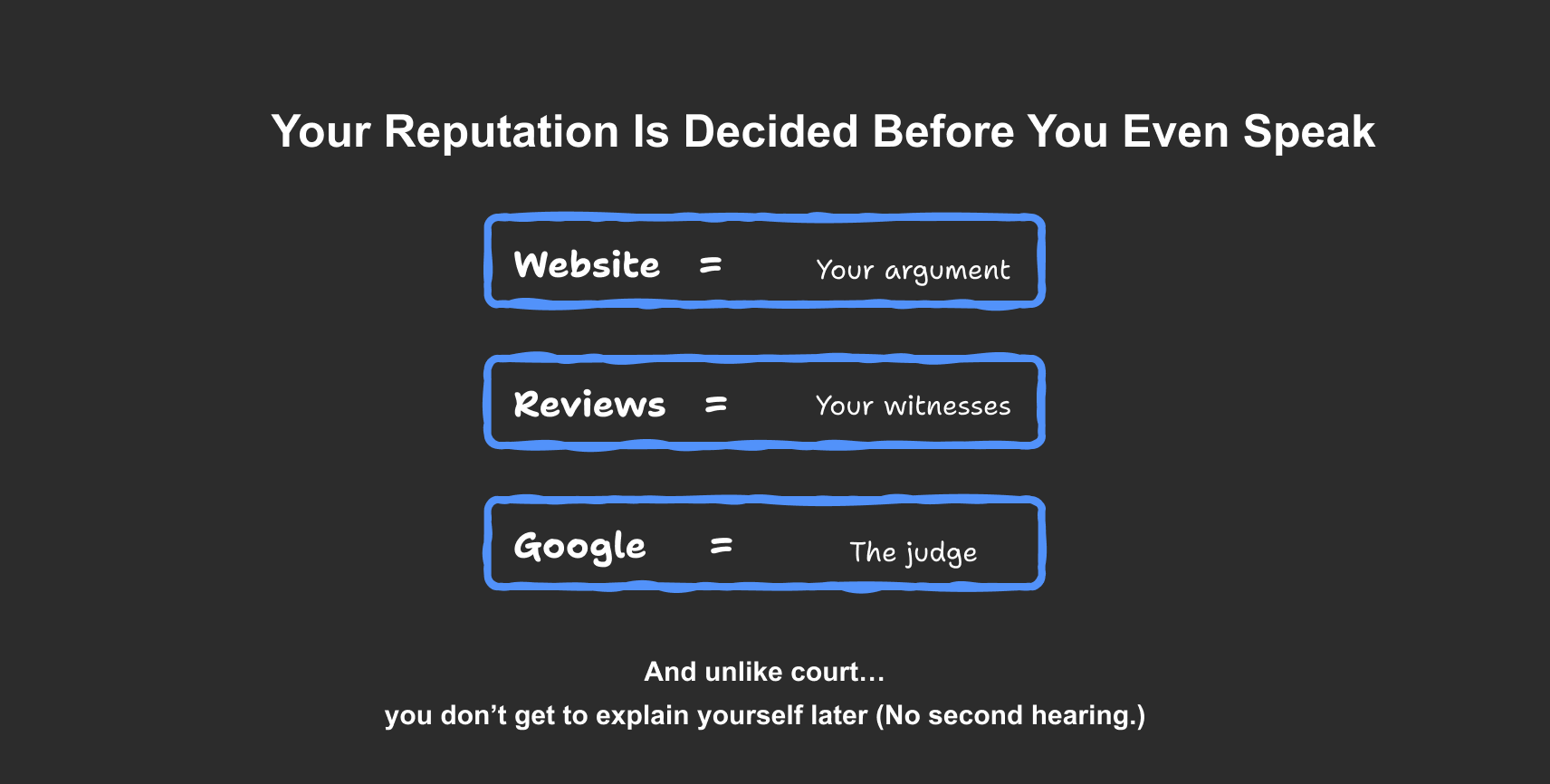
What Happens When Someone Googles You Right Now?
Search:
- Your firm name
- Your name
- “[Your firm] reviews”
Now ask yourself:
Would you hire this lawyer?
Or would you think:
“Let me check one more option…”
Also check:
- Outdated phone numbers
- Wrong addresses
- Duplicate listings
Because small gaps… create big doubts.
Why Should You Care About Page 1 of Google?
Because page 2 is where decisions don’t happen.
If you’re not on page 1, you’re invisible.
Your goal: control what shows up when someone searches you
Start with:
- A clear, updated website
- Strong profiles
- Well-defined services
Then build:
- Helpful content
- Real client-focused answers
- Credible mentions
This creates your reputation shield.
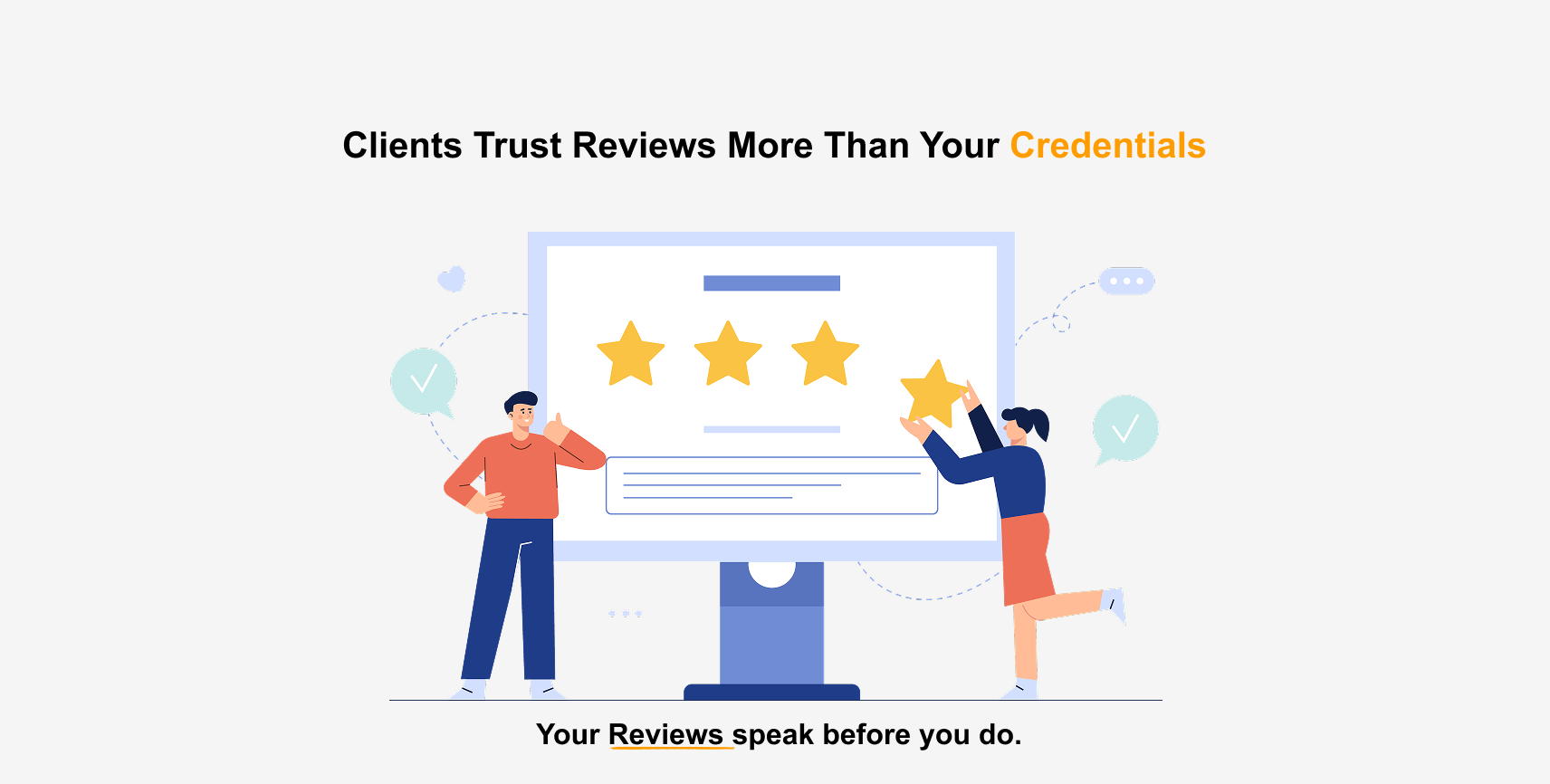
Do Clients Really Decide Based on Reviews?
Yes. Faster than you think.
1. When a Client Leaves a Good Review, What Should You Do?
Don’t waste it.
Weak reply:
“Thanks.”
Better reply:
“Thank you for trusting us with your case. We’re glad we could support you during a difficult time.”
You’re not replying to one client
You’re influencing every future client reading it
2. What If You Get a Negative Review?
This is where your reputation is built.
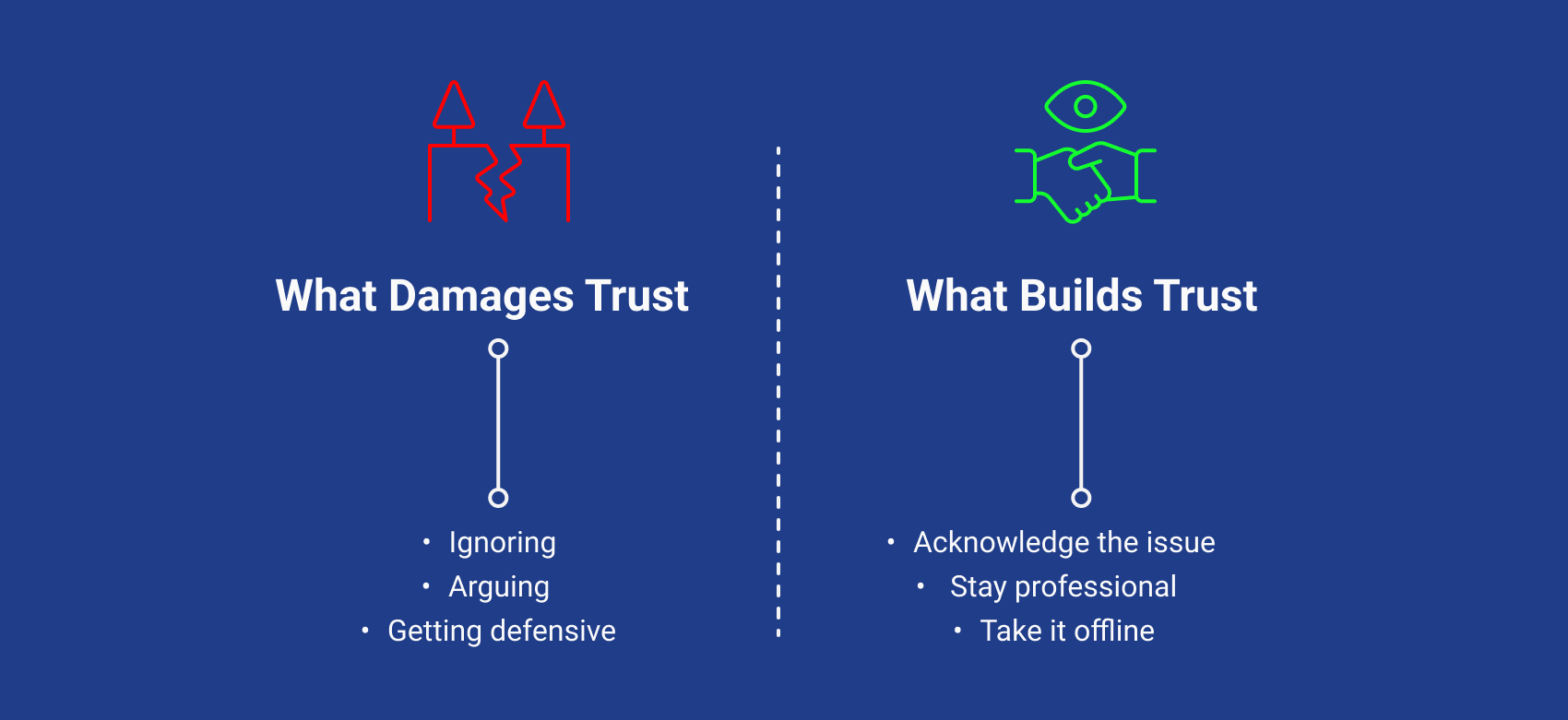
71% of people update negative reviews when handled well
Handled right, a negative review can increase trust.
How Do You Actually Get More Reviews?
Stop waiting. Start asking.
1. When Should You Ask for a Review?
Right after a successful outcome.
Not:
- During billing
- During stress
- During conflict
2. How Do You Avoid Negative Reviews While Asking?
Use this filter:
“Are you happy with how we handled your case?”
Yes → ask for review
No → fix it first
3. How Do You Make Sure Clients Actually Leave Reviews?
Make it easy:
- Share direct links
- Keep it quick (2–3 minutes)
- Remove unnecessary steps
Because more effort = less action (Always.)
Do You Really Need Social Media?
You don’t need to go viral.
You need to be visible and credible.
Use it to:
- Explain legal topics simply
- Share insights
- Show expertise
Pick one platform:
LinkedIn → credibility
Instagram/TikTok → reach
Consistency matters more than creativity.
Is Your Google Profile Really That Important?
Yes.
Before someone visits your website, they see your Google profile.
87% of clients trust Google reviews when choosing a service
Ask yourself:
- Is it complete?
- Are reviews active?
- Are you responding?
If not, you’re losing trust early.
How Do You Track Your Reputation?
Track it like you track your cases. (You wouldn’t ignore those, right?)
Focus on:
- Your rating
- Review count
- Response time
- Common feedback trends
Also:
- Set alerts
- Monitor competitors
Because reputation changes quietly.
How Do You Stand Out From Other Lawyers?
Reviews build trust.
Authority removes doubt.
Build authority by:
- Speaking
- Writing
- Sharing insights
- Getting featured
The goal: clients stop comparing once they see you.
Is Reputation Management a One-Time Task?
No. (If only it were that easy.)
It’s:
- Built slowly
- Maintained consistently
- Lost quickly if ignored
Simple roadmap:
Month 1 → Audit
Month 2–3 → Fix + reviews
Month 4–6 → Content + authority
Ongoing → Monitor
What’s the Biggest Mistake to Avoid?
Fake reviews.
They:
- Damage trust
- Violate platform rules
- Backfire long-term
Once trust is gone…
it’s very hard to rebuild.
Final Thought
You don’t need perfect reviews.
You need:
- Enough good ones
- Smart responses
- A strong presence
Because your client is asking one question:
“Can I trust this lawyer?”
If your online presence answers that clearly…
you’re already ahead of most firms.
FAQs: Reputation Management for Lawyers
- Do anonymous reviews hurt your law firm?
Yes, they can.
But the bigger issue is ignoring them.
If you reply calmly and professionally, it actually builds trust.
Clients don’t expect perfect reviews.
They expect you to handle problems well.
- Can reputation management help your SEO?
Yes.
More good reviews and regular responses help:
- Your local ranking
- Your visibility
- Your trust factor
It won’t replace SEO, but it supports it strongly.
- Do reviews affect your paid ads?
Yes, very much.
Even after clicking your ad, people will check your reviews.
So if your reviews are weak, you lose that client.
Simple.
- What should you do if a review is fake?
Don’t argue online.
Do this:
- Reply professionally
- Report the review
- Share proof if needed
If it clearly breaks rules, it can be removed.
- How many reviews do you need?
No fixed number.
Just ask this:
“Do you look better than your competitors?”
If yes, you’re good.
If not, you need more reviews.
- How fast should you reply to reviews?
As fast as possible.
Best practice:
- Within 1–2 days
Quick replies show you care.
No reply looks careless.


.png)
.jpg)
.jpg)


